

Insider Brief
- University of Rhode Island students are working as teaching assistants for Brookhaven National Laboratory‘s Quantum Information Science 101 course, helping college students learn quantum computing and programming.
- The collaboration has involved URI students serving as both course participants and teaching assistants, with instruction covering quantum computing concepts and IBM Qiskit.
- URI faculty say the partnership supports student learning, strengthens ties between universities and national laboratories, and creates opportunities for further collaboration in quantum research and education.
PRESS RELEASE — As a sophomore at the University of Rhode Island three years ago, Morgan Beck ’26 began diving deep into the world of quantum physics, wanting to learn more about the branch of science that studies matter and energy at the most fundamental level.
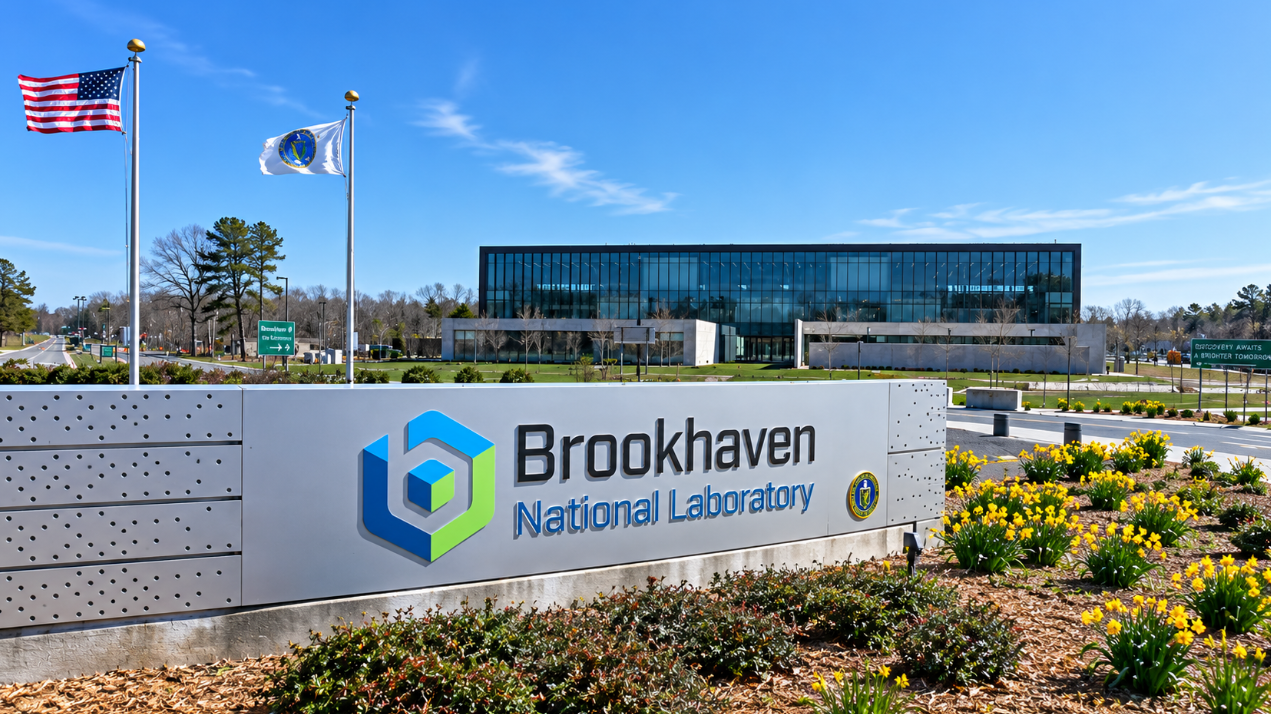
At that time, Beck—a 2025 URI College of Arts and Sciences Fellow from Exeter, Rhode Island, who studied black hole systems for her project at URI—took a six-week virtual Quantum Information Science 101 course at Brookhaven National Laboratory in Upton, New York. Part of the U.S. Department of Energy, Brookhaven is vital for advancing American scientific leadership, energy security, and technological innovation.
There, Beck and fellow college students from around the country learned in hands-on programming labs how quantum algorithms, when applied to specific problems, can outperform classical computers.

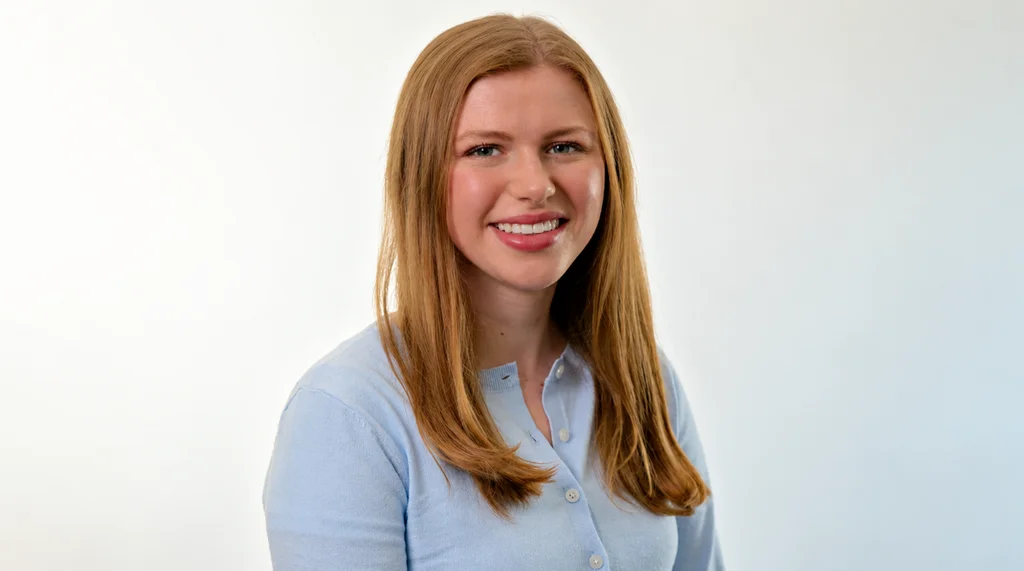
Beck’s time as a student at Brookhaven impressed David Biersach, a lab staffer in Brookhaven’s Information Technology Division and QIS101 professor, so much that he asked Beck to return the following year as a teaching assistant, sharing her wealth of knowledge with other college students—a prime example of the student becoming the teacher.
“I loved this course so much, and I was very happy to go back to Brookhaven as a teaching assistant when they asked me,” said Beck, who graduated from URI this past spring with degrees in physics and applied math. “What was enjoyable to me as I was teaching was seeing how students approach quantum problems from different perspectives, and there was mutual growth as I looked at quantum from my own lens. I learned just as much from the students during that time as they did from me, which made this experience worthwhile.”
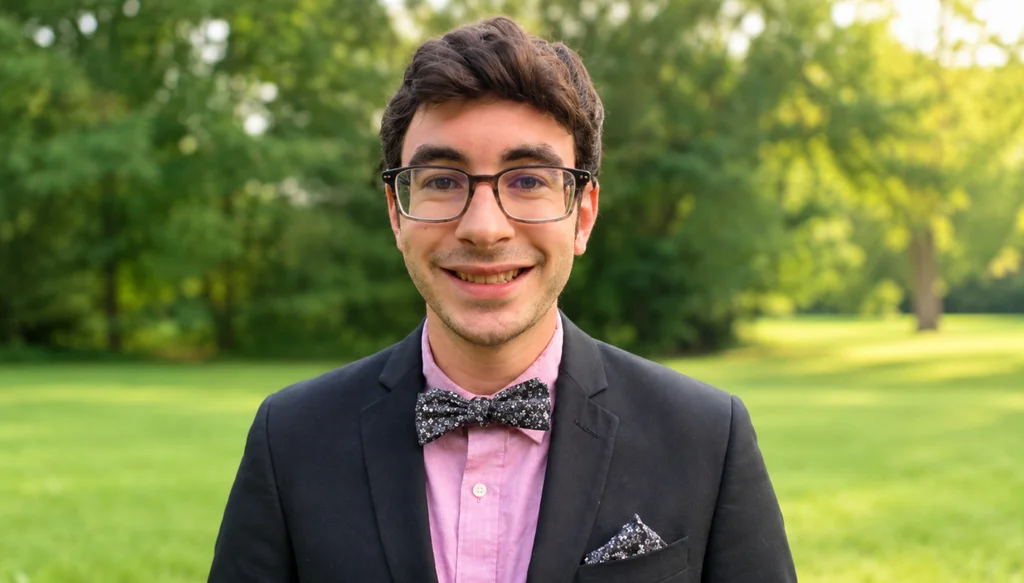
Beck’s teaching experience became the genesis for URI to further its relationship with Brookhaven by sending students to learn in the lab directly through the QIS101 program and become teaching assistants. Multiple URI students, including quantum computing master’s student Matt Sarsam, of Cleveland, Ohio, and Luke Ellert-Beck, a fifth-year Ph.D. physics student from Dubuque, Iowa, have helped mentor other collegiate minds in quantum physics at the prominent physics lab.
Additionally, URI students Emory Salaun, a graduate student from Providence studying computer science; Austin Higinbotham, a graduate student in physics from Peabody, Massachusetts; Logan Cote, a physics major from Goffstown, New Hampshire, have all recently taken QIS101 as students.
“This interaction with University of Rhode Island students is helping cement our relationship with Brookhaven. This is key, because the new guidelines for research and funding encourages the interaction between universities and national labs,” URI Department of Physics Chair Leonard Kahn said. “We’ve established a very good connection, and it’s been reinforced through the work of these students.”
Sharing Knowledge, Building Relationships
Brookhaven supports national security and prosperity by addressing its energy, environmental, and nuclear challenges through transformative science and technology solutions. Students enrolled in the QIS101 course learn how to use IBM Qiskit—a world-class software package for working with quantum computers—and hear discussions and lectures from quantum scientists and Brookhaven researchers.
Kahn said the importance of URI collaborating with Brookhaven with students taking QIS101 is threefold. The imminent emergence of quantum computing and its expected impact on society is the first major reason, he said.
Secondly, it’s crucial because of the importance of collaboration between academic institutions and government labs in federal funding, Kahn said, and third because of the benefits University students gain through this additional experience. “Our students have reported accelerated learning through the course work and their work as teaching assistants,” Kahn said.
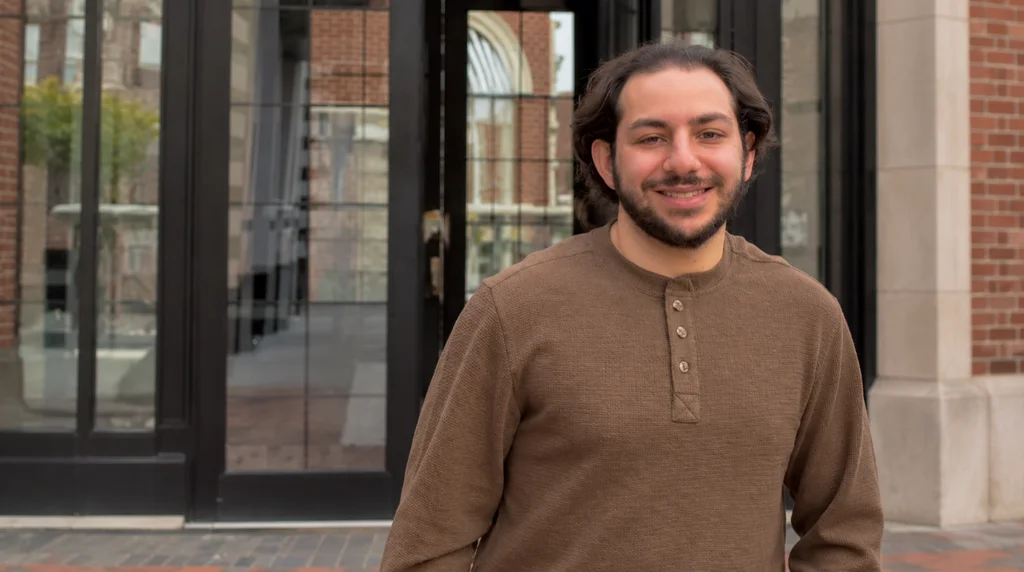
Both Sarsam and Ellert-Beck became Brookhaven teaching assistants without taking the QIS101 course as students, utilizing the knowledge they obtained in URI’s quantum programs to share with other top quantum students taking QIS101. Sarsam said providing students feedback on their challenging coding classwork was among the things he enjoyed the most as a TA.
Giving that feedback was critical not just for students to thrive in the fast-paced course, but also for Sarsam to excel as an educator, he said.
“Any student can write code and get the correct output, but that code may not generalize correctly,” Sarsam said. “So, making sure you help students where they did well and where they didn’t is crucial. It’s important to help create a good learning experience for students to help them get better at their work.”
Ellert-Beck enjoyed helping students simplify information and key points from QIS101’s lengthy lectures so that students could grasp quantum physics and computing more easily. Seeing the Brookhaven students’ excited reactions after gaining that understanding, especially on more advanced topics, was fulfilling, he said.
“There was one lecture that was really mathematical, and I wanted the students to slow down and teach what they learned to each other, then teach it back to me,” Ellert-Beck said. “When it clicked, they began engaging with that mathematical information and started to thrive from that point forward.”
Beck, Sarsam and Ellert-Beck agreed that their experiences as TAs for Brookhaven has opened the door for them to possibly become teachers down the line—potentially helping more students become educated in the science. Kahn firmly believes that URI’s partnership with Brookhaven will continue to grow.
“It’s very gratifying to hear from David Biersach about how our students have been so outstanding in Brookhaven’s program. He wants us to continue to send students there, both as TAs and as students in the course,” Kahn said. “He thinks what we’re producing here is excellent. I suspect that we’ll have several of our students continue as TAs, or join as TAs, to participate in the program.”